Goodness

This month I am going to write about a fruit of the Spirit I'm diving into: Goodness. In the Bible, the biblical definition of goodness (Greek: agathosune) is defined as a fruit of the Spirit (Galatians 5:22-23), characterized by moral excellence, uprightness of heart and life, and active kindness. It is the inner virtue that drives outward action, demonstrating God’s righteousness by doing what is right and beneficial for others, even when it is difficult.
Key Aspects of Biblical Goodness:
Active Virtue: It is not merely passive morality, but proactive, intentional goodness for the sake of others, such as helping the needy or correcting sin in love
Rooted in God's Character: It reflects God's nature; to act in goodness is to be more like God.
Difference from Kindness:
While kindness is the gentle, benevolent attitude toward others, goodness is the moral righteousness that may sometimes involve tough love or correction.Holy Spirit Driven: This virtue is produced by the Holy Spirit working in a believer, rather than by human effort alone.
How Goodness is Produced and Shown:
Spirit-Led: It is impossible to produce true, godly goodness on our own, as it is a fruit of the Holy Spirit.
Good Deeds: It involves acts of kindness, such as helping with chores, supporting the elderly, or volunteering.
Upright Living: It includes living a life that avoids evil, gossip, and conflict, choosing instead to live with integrity.
Selflessness: It involves putting the needs of others before one's own, often without seeking recognition
Practical Examples and Applications
Acts of Service: Assisting neighbors, volunteering, or providing for the poor are direct expressions of this fruit.
Daily Conduct: Choosing honesty over convenient lies and responding to mistreatment with prayer rather than retaliation.
Church Life: Encouraging fellow believers and avoiding divisive behaviors like gossip or slander
The Bible addresses goodness both as an essential attribute of God and as a "fruit" or result of the Holy Spirit working in a believer's life.
The Source: God’s Essential Goodness
Scripture emphasizes that true goodness originates from God's nature, as shown in Psalm 34:8 and Psalm 100:5. Jesus further emphasizes this in Mark 10:18. Furthermore, James 1:17 and Psalm 119:68 underscore that all good things stem from God.
The Fruit: Goodness in the Believer
As a Fruit of the Spirit, goodness is the outward expression of a transformed heart (Galatians 5:22–23). It is also defined as doing the "good works" God prepared (Ephesians 2:10, Matthew 5:16). Romans 12:21 commands believers to "overcome evil with good," while 2 Peter 1:5 calls for adding goodness (virtue) to one's faith.
Living Out Goodness
Goodness is "virtue in action" or doing right, regardless of circumstances. Key verses include Micah 6:8 (doing justice and loving kindness), Galatians 6:9–10 (not growing weary in doing good), and Luke 6:35.
Here is how it specifically differs from the others:
Goodness vs. Kindness (Chrestotes)
This is the most common comparison, as they are closely related but have distinct definitions.
Action vs. Disposition: Kindness is often seen as a gentle disposition or the practical ways we love others. Goodness is the inner moral excellence and the "zealous activity" to do what is right for another's benefit.
"Tough Love": Kindness simply seeks to help, while goodness is strong enough to rebuke and discipline if it is for the person's ultimate good.
Biblical Example: Jesus showed kindness to the woman at His feet but showed goodness when He drove the moneychangers out of the Temple—both were "good," but one required firm action to uphold righteousness.
Goodness vs. Gentleness (Prautes)
Strength and Manner: Gentleness refers to how we handle people—it is "strength under control" or a humble manner. Goodness, however, describes the purity of our motives and the uprightness of our conduct.
Internal Quality: While gentleness is about how we engage with others to avoid unnecessary offense, goodness is about being transformed at the core to mirror God’s own nature.
Unique Characteristics of Goodness:
Broadest Attribute: Some scholars call goodness the "widest word" for virtue because it encompasses moral excellence, honesty, and a generous spirit all at once.
Confrontational Purity: Unlike attributes like peace or patience, which can be internal and passive, goodness is active and expansive. It involves a willingness to take a stand against evil and bring light to dark situations, even if it causes social friction.
Communicable Attribute: Goodness is one of God’s "communicable attributes," meaning it is a quality of His very being that He specifically shares with us through the Holy Spirit.
Here is a breakdown of how the nine attributes differ in their focus and expression. Think of them as a single diamond with nine different facets:
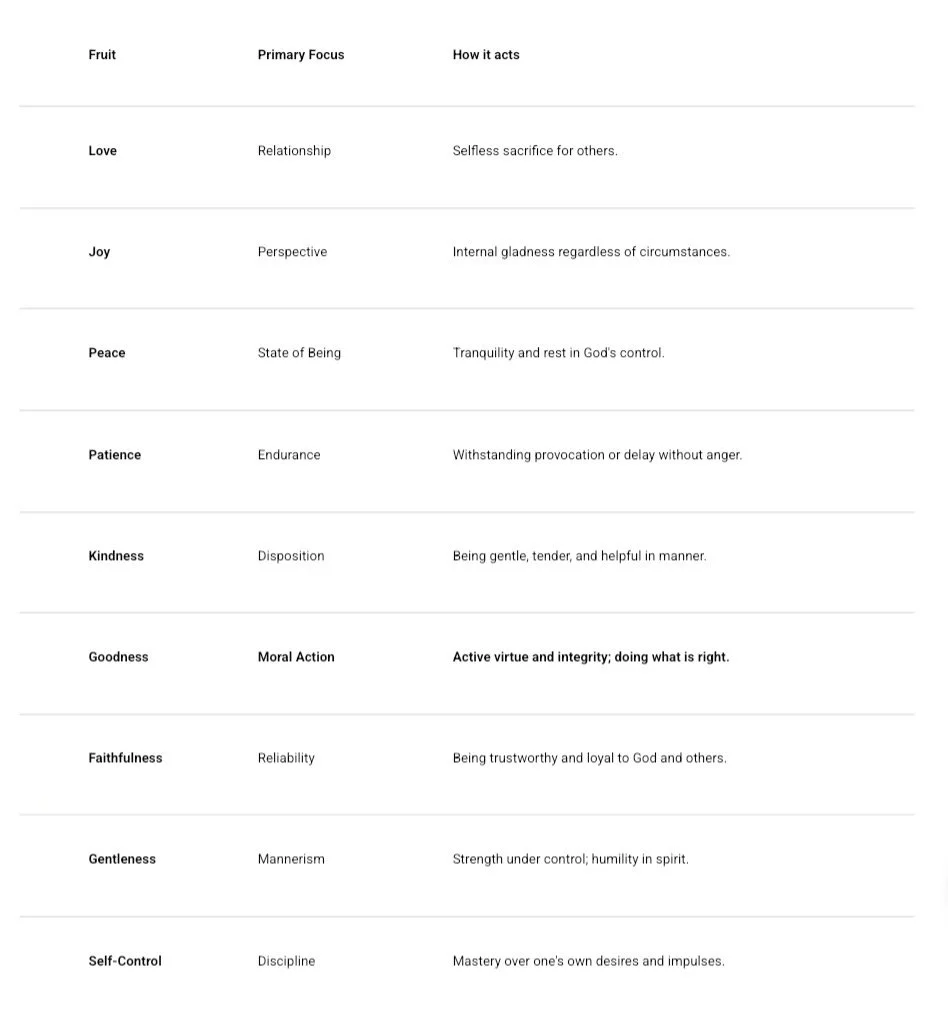
The "Goodness" Distinction”
At a glance, Goodness is the "muscle" of the group. While kindness is the soft word spoken to someone in pain, goodness is the moral backbone that leads you to do the right thing even when it’s unpopular or requires a "tough love" approach. It is the bridge between a good heart and a good life.